
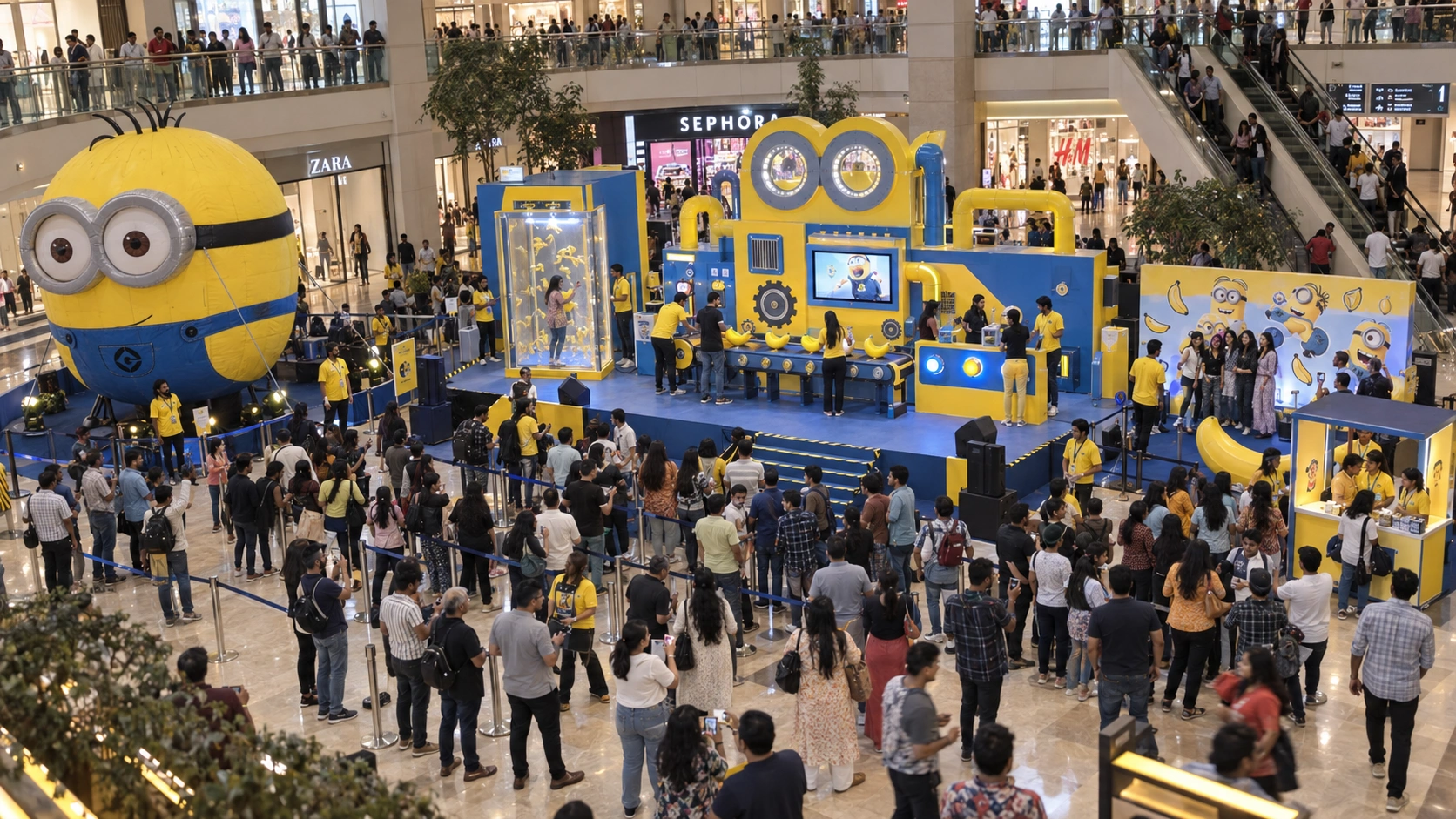
Choose a full-service event management agency by checking its relevant launch experience, proposed strategy, execution team, itemised budget and reporting plan. The right partner should explain how people will discover your product, understand its value and experience it through a well-managed launch.
The details change by category. An FMCG launch may need product sampling, retail activations and a clear route to purchase. An automotive launch may need a vehicle reveal, guided demonstrations, customer education and professionally managed test drives.
This guide explains how to compare product launch agencies in India, how to launch a new FMCG product in the market, and what to look for in an automotive experiential marketing partner.
What a Full Service Product Launch Agency Should Manage
A full-service product launch agency coordinates the agreed creative and operational work through a lead team. Depending on the brief, its scope can include:
- Launch concept, audience journey, messaging and experience design.
- Venue selection, site planning, stage design, fabrication, sound, lighting and screens.
- Product demonstrations, sampling zones, brand ambassadors and guest management.
- Vendor coordination, logistics, rehearsals, applicable permissions and on-site delivery.
- Photography, video, approved campaign content and post-event reporting.
Confirm every deliverable in writing. Public relations, paid media, influencer partnerships, retail distribution and sales follow-up may sit with separate teams. A product launch event is one part of a go-to-market plan; the brand still needs to coordinate pricing, stock, distribution and customer service.
How to Choose the Right Event Management Agency for Your Product Launch
1 Define the Launch Objective Before Requesting Ideas
Give each agency the same brief so you can compare proposals fairly. Include the product, target audience, priority locations, launch date, budget range, expected attendance and intended outcome.
Be specific about the audience. Journalists need a clear product story and useful information. Retailers need to understand the range and commercial proposition. Consumers need a relevant reason to try the product. Define whether the event should build awareness, explain features, encourage trial or support a wider launch campaign.
2 Check Relevant Experience and the Actual Role Played
Ask for case studies that resemble your category, scale and operating conditions. For FMCG product launch marketing, look for sampling or retail activation experience. For automotive launches, examine vehicle handling, demonstration zones, technical production and customer experience.
Ask what the agency delivered itself, what partners handled, and who led the project. Useful evidence includes the brief, photographs, delivery challenges, reporting methods and a reference you can contact. A client logo alone does not establish responsibility for the whole campaign.
3 Evaluate How the Idea Explains the Product
A useful proposal connects the creative idea to a product benefit. Ask the agency to walk you through what a visitor sees, does, learns and remembers.
For a beverage, that might mean tasting the product and understanding its intended occasion. For a vehicle, it could mean exploring cabin space or learning how a charging feature works. Projection mapping, holographic displays, AR and interactive screens should have a clear purpose. Request a demonstration or prototype when a technical feature is central to the experience.
4 Confirm Who Will Deliver the Work
Meet the project manager and production lead who would run your launch. Clarify which capabilities are in-house, which are outsourced, and who remains accountable for suppliers.
For a multi-city product launch, check local staffing, transport, installation schedules, language requirements and quality control. Ask how designs, scripts and product information will stay consistent across venues. A credible proposal names owners, approval deadlines and dependencies rather than relying on a general promise of end-to-end support.
5 Compare Itemised Budgets and Contract Terms
Request separate costs for the venue, design, fabrication, technical equipment, staffing, logistics, content, agency fees and applicable taxes. Ask whether quotations include installation, dismantling, rehearsals, transport and overtime.
Compare the same specifications across agencies. A lower quotation may assume a smaller setup or fewer operating hours. Before signing, agree on payment milestones, cancellation terms, change approvals, content usage rights, reporting deliverables and the process for authorising extra expenditure.
6 Review the Operating Plan
Ask for a production schedule, event running order, rehearsal plan and a clear escalation contact. The plan should address practical needs such as visitor queues, accessibility, electrical capacity, equipment backups and weather exposure where relevant.
Category details matter. Food sampling needs appropriate handling and storage. Vehicle experiences need competent operators and a suitable operating environment. Confirm who will check venue conditions, applicable permissions and insurance arrangements, and when those checks will be completed.
7 Agree on Measurement Before Approving the Concept
Define what counts as a visitor, meaningful interaction, completed demonstration or valid feedback response. Ask how the agency will collect evidence and avoid counting the same person repeatedly.
Separate event delivery measures from wider business outcomes. The agency can report the agreed activation results; the brand or its retail and dealership partners may need to supply purchase, booking or repeat-purchase data. Agree on responsibilities and reporting dates before launch.
A Practical Agency Comparison Scorecard
Use the following suggested weights as a starting point for comparing proposals. They are illustrative rather than a published industry benchmark. Adjust them to your brief.
| Evaluation area | Suggested weight | Evidence to request |
| Relevant launch experience | 20 | Comparable case studies and references |
| Strategy and product understanding | 20 | Audience journey and benefit-led concept |
| Production and execution | 20 | Named team and delivery schedule |
| Budget and commercial clarity | 15 | Itemised scope and change terms |
| Operating readiness | 10 | Rehearsals and category-specific plans |
| Measurement | 10 | Defined metrics and sample report |
| Communication | 5 | Approval process and escalation contact |
| Total | 100 |
Rate each area from 1 to 5, then multiply the rating by its weight and divide by 5. For example, a rating of 4 in a 20-point area earns 16 points. Resolve essential delivery or safety gaps before considering the final total.
How to Launch a New FMCG Product in the Market
FMCG means fast-moving consumer goods, including packaged foods, beverages, household products and personal care items. An effective FMCG product launch strategy connects consumer understanding with availability, product trial and ongoing evaluation.
1 Understand the Customer and Purchase Occasion
Identify who the product is for, what need it addresses, where people would buy it and why they would choose it at the proposed price. Test the proposition with relevant consumers before planning a large activation.
Check whether people understand the packaging, benefit and intended use without a lengthy explanation. Feedback on flavour, fragrance, convenience or pack size can help you refine the product and the way it is presented.
2 Confirm Product and Packaging Readiness
For food and beverage launches in India, review the applicable FSSAI licensing, product standards, packaging, labelling and advertising-and-claims requirements with the responsible product and compliance teams. FSSAI publishes the relevant regulations and amendments. Requirements for other FMCG categories need a separate review. [1]
Give promoters an approved product information sheet. It should explain the product accurately, address common questions and identify claims they may use. For sampling, plan handling, storage, relevant allergen information and disposal around the actual product.
3 Make the Product Available Where You Promote It
Coordinate the launch with confirmed stock, participating outlets, delivery coverage and replenishment. Check the product listing, price, pack images and availability on any retail or online channels featured in the campaign.
A tasting activity is more useful when visitors can easily find the product afterwards. Give them accurate information about participating stores or a working product-page link. Check availability in each activation location before the campaign goes live.
4 Pilot the Activation Before Expanding
Test the approach in a manageable group of stores, venues or neighbourhoods. Use the pilot to check audience fit, promoter explanations, sampling operations, feedback questions and replenishment needs.
Look for specific problems you can fix. If people enjoy a sample but cannot find the product, investigate availability. If they struggle to describe the benefit, improve the explanation. Set your decision criteria before the pilot so the team knows what would justify expansion.
5 Choose Sampling and BTL Activities Around the Audience
Below-the-line, or BTL, activations create direct interactions with a selected audience. Depending on the product, suitable formats may include in-store demonstrations, supermarket sampling, residential community activities, office activations or pop-up experiences.
For example, a hypothetical breakfast snack launch could combine a tasting counter near a stocked store with a short explanation of when to use the product. The next step should be easy to understand, whether it is finding the shelf, checking an ingredient or visiting a product page.
6 Measure Trial and Repeat Purchase Separately
Count samples distributed as an activity measure. Record completed tastings separately, and use purchase data where available to understand buying behaviour. NIQ distinguishes trial, meaning an initial purchase, from repeat, meaning a subsequent purchase by someone who already tried the product. Free samples alone do not establish either purchasing outcome. [2]
Use feedback alongside available sales and availability data to decide what to improve. NIQ BASES identifies weeks 4, 8 and 13 as useful launch-performance checkpoints. Treat these as a research-informed reference and adapt your review schedule to the category and purchase cycle. [3]
Choosing an Automotive Experiential Marketing Agency for a Vehicle Launch
When the goal is customer education, automotive experiential learning means helping people understand a vehicle through guided, hands-on experiences. An automotive experiential marketing agency should turn technical information into accurate demonstrations that are relevant to prospective buyers.
The best fit depends on the brief. A media reveal, dealership preview, public exhibition and customer driving experience each require different capabilities. Ask agencies to demonstrate the specific expertise your format needs.
Look for Product Education as Well as Presentation
A vehicle launch experience can give visitors time to explore seating, storage, controls, connectivity and features relevant to their needs. For an electric vehicle, consider clearly explained charging demonstrations and realistic answers to common ownership questions.
Hyundai’s January 2025 announcement for Bharat Mobility Global Expo described a CRETA Electric launch alongside electric-mobility displays, vehicle-to-load demonstrations and simulators for advanced driver assistance systems, or ADAS. This published example of a planned launch format illustrates how product education can sit alongside a reveal. [4]
Check Specialist Delivery and Dealer Coordination
If driving activities are included, ask who manages the vehicles, instructors, participant checks, routes, briefings and operating arrangements. Confirm the capacity of each experience so queues and appointment schedules are realistic.
Give demonstrators current, manufacturer-approved information for the exact model and variant on display. Agree how product enquiries or requested appointments will be passed to the brand or dealership team, with appropriate permission. The brand should own the sales follow-up and provide any booking data needed for wider evaluation.
Build a Shortlist Around Evidence
Prioritise agencies that can show relevant vehicle-launch work, dependable technical production, capable product educators and a clear division of responsibilities with specialist partners. If your brief is specifically for dealer or sales-team training, also request evidence of training design and learning assessment.
Avoid selecting an automotive experiential agency solely because it offers impressive reveal effects. Ask how the experience will help your particular audience understand the vehicle.
How to Measure Product Launch Performance Clearly
Build the reporting plan around the objective and available data. The following measures serve different purposes and should remain distinct.
| Measure | What to record | What it tells you |
| Attendance | Unique checked-in visitors | How many people attended |
| Product engagement | Completed demonstrations or tastings | How many people experienced the product |
| Understanding | Answers to a defined feedback question | What respondents understood |
| FMCG purchase | Tracked purchases and the stated measurement window | Observed buying behaviour |
| Automotive experience | Completed guided sessions or test drives | Participation in the planned experience |
| Online activity | Platform-defined reach, views or interactions | Digital exposure and engagement |
For an illustrative example, suppose a launch records 1,000 unique attendees and 300 complete a demonstration. The demonstration participation rate is 30%, calculated as 300 divided by 1,000. This is a participation measure, not a purchase conversion rate or an industry benchmark.
If you compare sales before and after a campaign, account for other influences such as discounts, stock changes and wider advertising. Report what the data can establish, and explain any limits on attributing sales to the event.
Questions to Ask Before Signing With a Product Launch Agency
- Which comparable launches have you delivered, and what was your exact scope?
- How will the experience explain our product to the intended audience?
- Who will manage our project and be present on site?
- Which services are included, outsourced or excluded?
- What assumptions could change the quotation?
- What must the brand supply, approve or arrange?
- How will you rehearse the experience and handle operating problems?
- What will the final report measure, and when will we receive it?
Use the answers to compare accountability as well as creative ideas. Be cautious when a proposal leaves essential costs unexplained, relies on unverified case studies or promises guaranteed sales without stating how those results would be measured.
Plan Your Launch With Experiential Marketing Agency
At Experiential Marketing Agency, powered by Trzy Innovationz, we help brands plan product launch experiences in India. Our product launch and experiential marketing services bring together creative concepts, event production, brand activations and on-ground execution. [5]
Through Trzy X, technology options include projection mapping, CGI and anamorphic content, Holobox displays and Glambot. Each format should serve a clear role in how your audience experiences the product. [6]
Discuss your product launch brief with your product category, target audience, location, date and budget range. The focus is on building brand awareness, reach and engagement through an appropriate launch experience.
Frequently Asked Questions
How Do I Choose a Full Service Event Management Agency for a Product Launch
Compare relevant experience, product understanding, the proposed audience experience, the delivery team, itemised costs and reporting. Ask for references and confirm the scope, responsibilities and commercial terms in writing.
How to Launch a New FMCG Product in the Market
Understand the customer, validate the proposition, confirm product readiness and secure availability. Pilot suitable sampling or retail activations, then use feedback, purchase data and repeat-purchase evidence where available to guide expansion.
What Are the Best Automotive Experiential Learning Agencies for Product Launches
The strongest shortlist depends on your launch format. Look for verified automotive work, effective product education, specialist vehicle operations where needed, and coordination with brand and dealership teams. Request evidence against your brief before accepting a claim that an agency is the best.
How Much Does a Product Launch Event Cost in India
The cost depends on the location, attendance, production scale, venue, technology, staffing, content and campaign duration. Get an itemised quotation against an agreed brief; a general price range cannot reliably describe every launch.
How Early Should You Appoint a Product Launch Agency
Appoint the agency early enough to complete strategy, venue checks, design approvals, production and rehearsals. Ask it to work backwards from the launch date and identify the critical deadlines. Multi-city activities and custom installations need their own detailed schedules.