
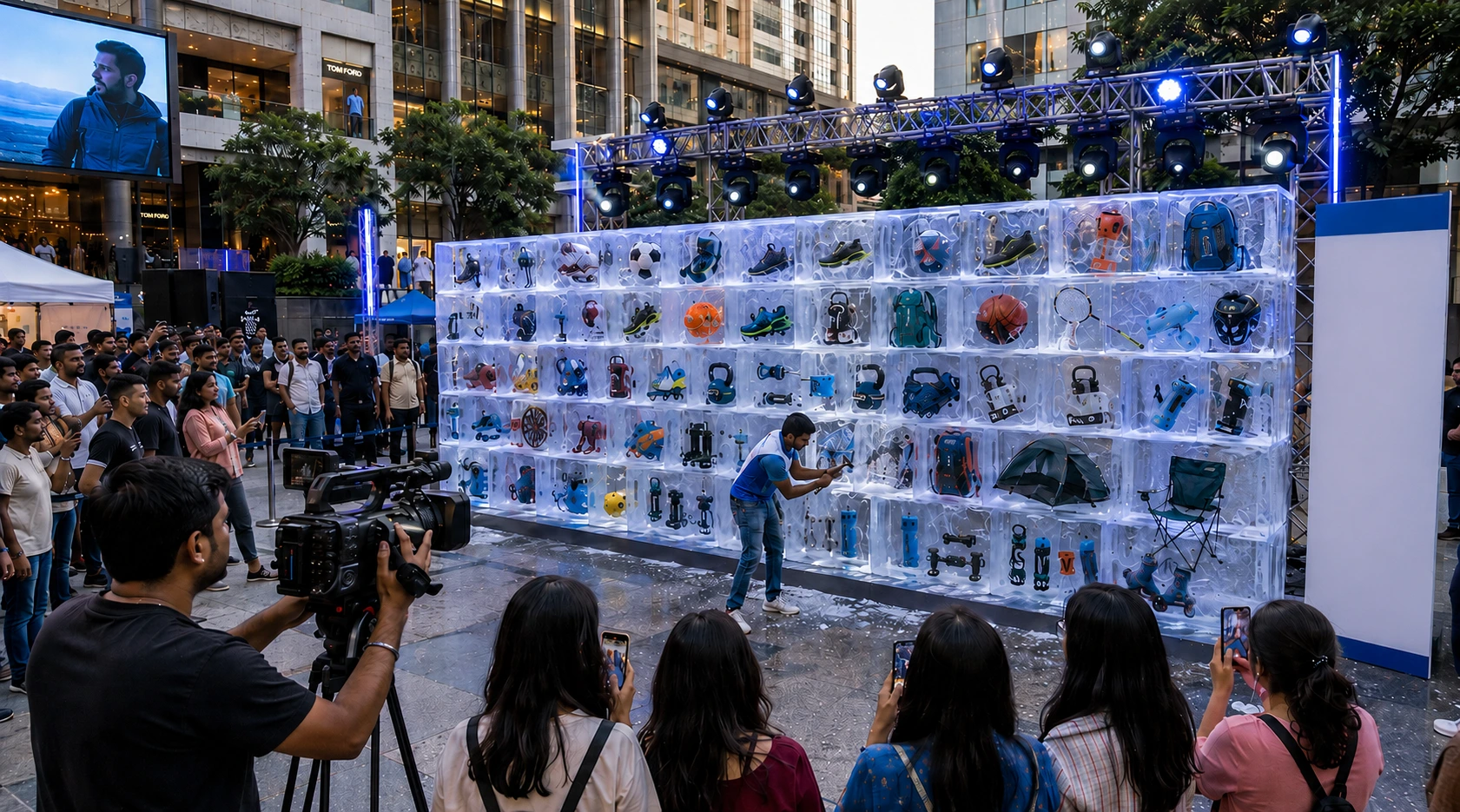
Updated for 2026
Brand activation does not begin with a stall, fabrication, promoters, giveaways, or the latest technology. It begins with a clear understanding of what the brand wants to achieve and how people should experience it.
A successful Brand Activation Planner looks beyond the physical setup. The real job is to understand the brand, the product or service, the target audience, the campaign objective, the location, consumer behaviour, and the final result the brand wants to create.
At Experiential Marketing Agency, powered by Trzy Innovationz, we believe an effective activation should never feel like a campaign copied from another brand with a new logo added to it. Every brand has a different audience, personality, product, market, objective, and location. Therefore, every activation needs its own strategy.
A campaign designed for an automobile brand cannot simply be replicated for an FMCG company. An activity that performs well on a college campus may not work inside a premium shopping mall. Similarly, a technology-led installation that looks impressive may still fail if it does not communicate the actual product benefit.
Professional brand activation planning is about bringing together brand strategy, audience insight, location intelligence, creative thinking, execution, and measurement in one connected campaign.
What Is Brand Activation?
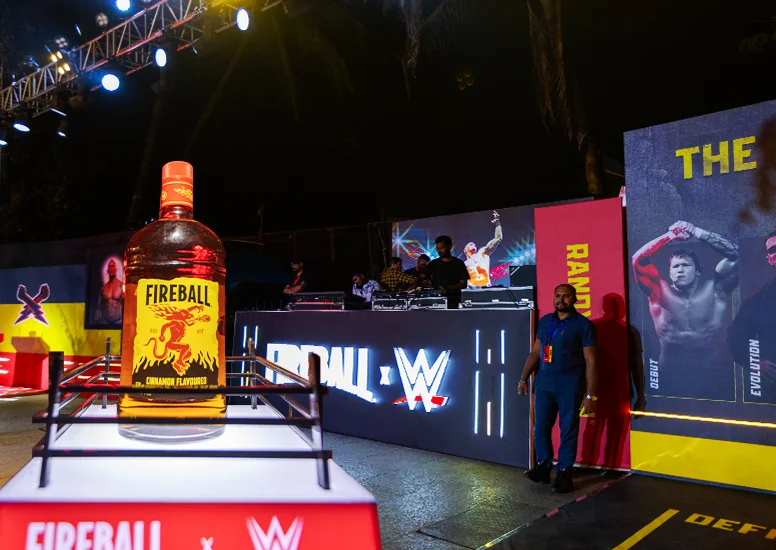
Brand activation is a marketing approach that encourages people to interact directly with a brand instead of simply seeing or hearing its advertising.
The interaction could involve trying a product, participating in a game, testing a feature, entering an immersive installation, visiting a pop-up, experiencing AR or VR, watching a live demonstration, generating personalised content, or becoming part of a larger branded event.
The format can vary dramatically, but the principle remains the same: the audience should be given a meaningful reason to participate.
Traditional advertising usually tells people what a product can do. Brand activation creates an opportunity for people to experience what the product can do.
That difference is what makes experiential marketing valuable.
Why Brand Activation Matters More in 2026
Experiential marketing is becoming increasingly important in India as brands search for ways to create deeper engagement beyond passive advertising.
Research published in March 2026 by EY-Parthenon and BookMyShow estimated India’s live-events market at approximately ₹13,000 crore. The report also found that 78% of Indian consumers prefer experiences over products, while 59% of live-event attendees recall brands they interact with on-ground and 55% report higher purchase intent after interacting with brands at events.
The same research showed that 88% of surveyed brands already investing in experiential marketing were increasing their spending.
These numbers should not simply encourage brands to organise more events. The more important takeaway is that people increasingly value participation, but brands need stronger planning to convert that participation into measurable marketing impact.
This is why the role of a professional Brand Activation Planner has become increasingly relevant.
What Does a Brand Activation Planner Actually Do?
A Brand Activation Planner converts a marketing objective into a real-world consumer experience.
The planner should understand what the company represents, what the product or service needs to communicate, who the target audience is, where that audience can be reached, what will motivate participation, and how the campaign will eventually be evaluated.
This work should happen before discussions around booth size, promoter uniforms, giveaways, screens, AR, VR, AI, holograms, or fabrication.
Those are executional decisions.
The strategic questions come first.
A good activation planner needs to ask: What should people remember after interacting with the brand? Why should they stop? Why should they participate? Does the experience actually communicate the brand benefit? Is the chosen location relevant to the audience? And how will the brand know whether the campaign worked?
When these questions are answered clearly, the creative direction becomes much stronger.
Start With the Objective, Not the Activation Idea
One of the most common mistakes brands make is deciding what they want to build before deciding what they want to achieve.
A company might say, “We want an AI activation,” or “We need a VR experience,” or “Let’s create a large installation because it will look impressive.”
These may eventually become the right solutions, but they should never be the starting point.
The first question should always be:
What should change because this activation happened?
If the primary objective is brand awareness, the campaign should focus on visibility, relevant reach, recall, participation, and shareability.
If the goal is product trial, the activation should make it easy for people to try, test, taste, or use the product.
If the objective is education, the experience should simplify complex information and allow the audience to understand the benefit naturally.
If it is a product launch, the experience should create curiosity, storytelling, excitement, and meaningful product discovery.
A strong Brand Activation Planner therefore builds the activation around the objective rather than forcing the objective into an already selected idea.
Audience Planning Comes Before Location Planning

It is difficult to choose the right activation location if the audience has not first been defined properly.
Descriptions such as “men and women aged 18–35” are often too broad to be strategically useful. Two people of the same age can have completely different lifestyles, interests, purchasing behaviour, spending power, and media habits.
A technology enthusiast attending a gaming event behaves differently from a working professional moving through a corporate park. A premium automobile buyer behaves differently from a college student. A parent shopping with children responds differently from someone travelling through a transit location.
Good activation planning therefore considers not only demographic information, but also lifestyle, behaviour, interests, motivations, product familiarity, location, and available time.
The more precisely the audience is understood, the more relevant the experience can become.
Why Location Can Make or Break a Brand Activation
Location is not simply where the stall will be installed. It is part of the strategy.
Marketers sometimes focus heavily on total footfall. However, high footfall is not always valuable if most of those people have little relevance to the product.
Imagine one location with 100,000 visitors where only a very small percentage matches the brand’s target customer. Another location may have only 20,000 visitors, but a majority may fall directly within the desired audience.
The second location could generate significantly better results despite having lower overall traffic.
That is why a Brand Activation Planner should focus on relevant footfall, not just total footfall.
Location planning also affects dwell time, visibility, participation behaviour, permissions, logistics, available space, technical infrastructure, operating hours, and the amount of attention the audience can realistically give to the campaign.
Mall Brand Activation Planning
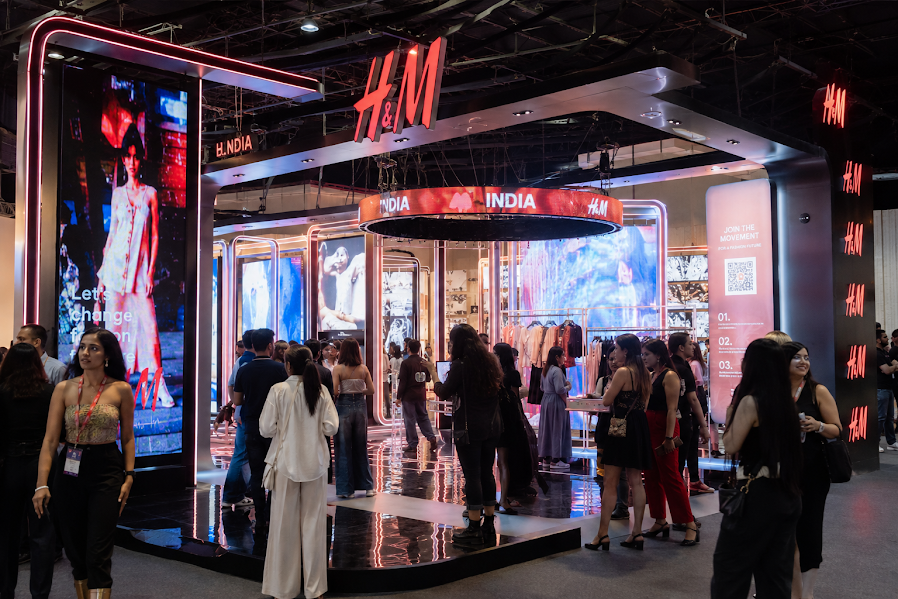
Shopping malls can be excellent activation environments because they combine high footfall with consumers who are already in a discovery and purchasing mindset.
However, malls are also extremely competitive environments. Shoppers are surrounded by storefronts, offers, promotional kiosks, screens, signage, entertainment, and other brands.
The first challenge is therefore not participation. It is getting people to stop.
A strong mall activation needs immediate visual or experiential attraction. Product demonstrations, gamification, interactive screens, AI experiences, sampling, AR, pop-ups, competitions, and immersive installations can all work, but only when they are relevant to the product.
For example, a technology brand may benefit from an interactive product challenge, while a food brand may be better served by a clever sampling journey.
The format should always be selected based on what the audience needs to understand or experience.
Corporate Park Brand Activation
Corporate environments require a very different strategy.
People may be entering work, leaving work, moving between meetings, or taking a short lunch break. Their available attention may be limited.
This means the activation needs to be quick, clear, convenient, and easy to participate in.
A ten-minute immersive experience that works beautifully at a festival could fail inside a corporate park simply because people do not have enough time.
In these environments, short challenges, product trials, coffee integrations, smart vending, wellness experiences, instant rewards, and quick interactive experiences may perform better.
Here, time becomes part of the creative strategy.
College and University Brand Activation
College and university environments can offer excellent opportunities for brands targeting younger audiences.
However, youth marketing should not simply mean loud music, promoters, and free products.
Students are more likely to respond when the activation provides entertainment, competition, social value, personalisation, or an opportunity to create content.
Gaming challenges, sports activities, creator-led experiences, music, technology, social competitions, and interactive experiences can work effectively when they feel authentic to the audience.
A useful question for planners is:
Would students participate even if no promoter had to convince them?
If the answer is yes, the idea probably has strong engagement potential.
Retail Brand Activation
Retail activation is particularly powerful because it happens close to the point of purchase.
The customer can potentially move from discovery to trial to purchase within a short period.
That means the activation should remove uncertainty and make the product easier to understand.
Live demonstrations, guided trials, product comparisons, sampling, personalisation, interactive displays, and limited-time offers can all be useful.
The goal should be to make the journey from interest to consideration to purchase as smooth as possible.
Outdoor Brand Activation
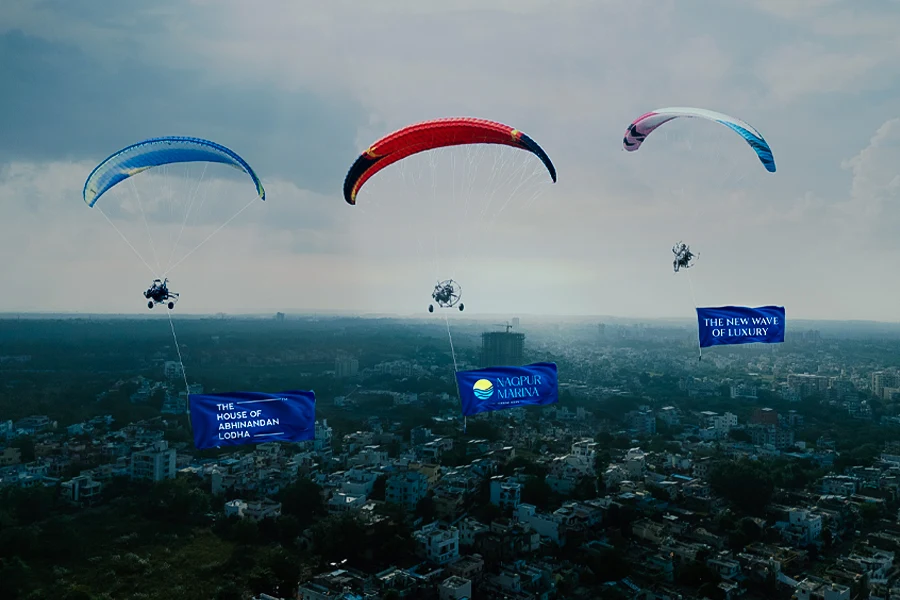
Outdoor activations require simplicity because people are often moving quickly.
The campaign may only have a few seconds to communicate what is happening.
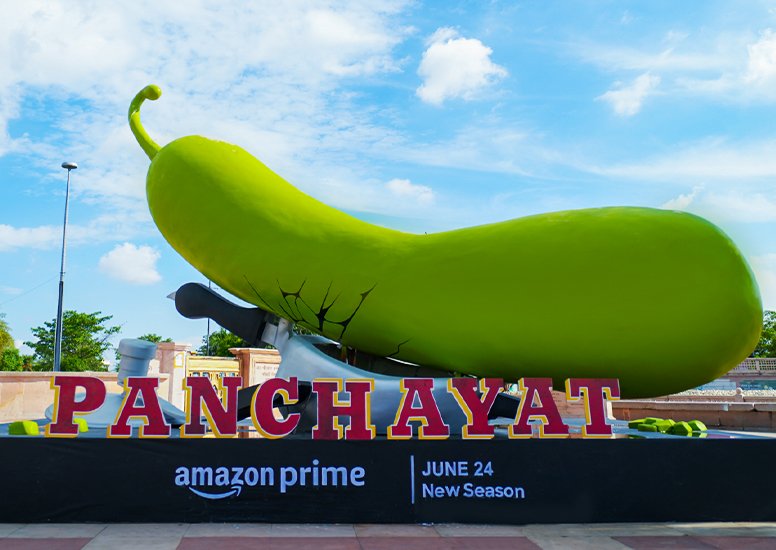
Large installations, branded vehicles, projection, mobile activations, interactive OOH, roadshows, and public challenges can all work in outdoor environments.
But the idea must be instantly understandable.
A useful principle is:
The faster people move through a location, the faster your activation needs to communicate.
If an audience needs to read several paragraphs or listen to a long explanation before participating, the concept may not suit that environment.
Exhibition and Trade Show Activation
Exhibitions are highly competitive because multiple brands are fighting for attention within the same category.
Simply building the biggest booth does not guarantee the best engagement.
A more useful approach is to plan the visitor journey carefully.
Why should someone stop? What should make them enter? What should they experience? What should they learn? And what action should they take afterward?
Product demonstrations, simulations, interactive displays, AR, VR, immersive storytelling, and guided demonstrations can work well when they help communicate a complex product or service more effectively.
Brand Activation Ideas That Make Sense in 2026
There is no universal “best brand activation idea.” The strongest idea depends on the brand, audience, location, objective, and product.
However, several approaches are particularly useful in 2026.
Gamified Product Experiences
Gamification is powerful because it makes participation voluntary and rewarding.
Instead of explaining a product feature through a printed panel, a brand can convert that feature into a challenge, reaction game, quiz, simulation, or competition.
For example, an automotive company could build a reaction-based safety challenge. A smartphone brand could create a photography competition. A sports company could allow visitors to test speed, accuracy, or endurance.
The product benefit becomes something the participant discovers instead of something the brand simply claims.
AI-Personalised Experiences
Artificial intelligence is creating new possibilities for personalised experiences.
A participant could receive an AI-generated visual, personalised video, custom recommendation, digital poster, or transformation based on their interaction.
However, AI should not be used simply because it is trending.
The question should always be whether AI adds personal value, makes the experience more memorable, or communicates the brand better.
If it does not, a simpler activation may be stronger.
AR and VR Experiences
AR and VR can be valuable when the product or environment is difficult to demonstrate physically.
Automobile, real estate, travel, gaming, education, entertainment, and technology brands may use immersive experiences to show environments or situations that cannot easily be recreated inside a normal activation space.
But the same principle applies: technology must solve a communication problem.
Experiential Product Sampling
Sampling becomes much more powerful when it is integrated into an experience.
Instead of simply handing someone a product, brands can build a short journey around discovery, participation, product education, trial, and reaction.
The sample becomes part of a story rather than just another free giveaway.
Social Content Experiences
One of the strongest opportunities in experiential marketing is creating physical experiences that naturally generate digital content.
AI portraits, 360-degree videos, slow-motion content, personalised posters, dynamic backgrounds, and branded cinematic clips can encourage sharing.
The important principle is to give the participant something they genuinely want to share rather than simply asking them to post about the brand.
Immersive Pop-Ups
A pop-up can become a temporary physical expression of the brand.
Lighting, sound, materials, interactive technology, product displays, digital content, and storytelling can all work together to create a complete environment.
When executed properly, visitors should feel that they have entered the brand’s world rather than simply walked into a temporary shop.
Holograms, Projection Mapping and Large-Scale Technology
Holograms, projection mapping, CGI, anamorphic content, and drone shows can create powerful visual experiences when scale and spectacle are important.
These formats can be useful for launches, entertainment, premium retail, corporate storytelling, tourism, automotive, and major public campaigns.
However, the visual effect should never become disconnected from the brand story.
Technology attracts attention.
The brand message must convert that attention into memory.
Don’t Start With Technology
One of the strongest rules in professional brand activation planning is simple:
Objective first. Technology second.
At Experiential Marketing Agency, the existing service offering includes technologies such as AR, VR, holograms, projection mapping, CGI, anamorphic content, and drone shows alongside BTL and traditional experiential execution.
But not every campaign needs them.
Sometimes the best recommendation may be a technology-led installation.
Sometimes it may be a simple product demonstration.
Sometimes the brand would benefit more from smaller activations across multiple relevant locations instead of one large spectacle.
Professional planning is about choosing what is right rather than what is currently fashionable.
Design the Activation as a Consumer Journey
A strong activation should be planned from the participant’s point of view.
First comes notice. What makes the person aware that something is happening?
Next comes understanding. Can they quickly understand what the activity is?
Then comes approach. Why should they move toward the experience?
After that comes participation. What exactly are they being asked to do?
The next stage is experience. How does the product, service, or brand benefit become part of the interaction?
Then comes reward. What does the participant receive in exchange for their time? It could be entertainment, knowledge, a physical reward, personalised content, or simply a memorable moment.
Finally comes recall and continuation. What should they remember, and is there a reason for the interaction to continue online or commercially?
Thinking this way creates a much stronger campaign than simply designing a visually attractive setup.
How Long Should a Brand Activation Experience Be?
There is no perfect duration.
The right length depends on the environment and the value of the experience.
A transit activation may need to communicate within seconds. A corporate activation may have only a few minutes. A mall shopper may spend longer if the experience is compelling. At an exhibition, a detailed product demonstration may require significantly more time.
The most useful principle is:
Do not ask consumers to spend more time than the value of the experience justifies.
Every registration field, queue, instruction, and unnecessary step creates friction.
A good activation should feel easy to enter and rewarding to complete.
Brand Activation vs Brand Awareness Campaign
Brand activation and brand awareness are closely related, but they are not identical.
A brand awareness campaign is designed to increase recognition, familiarity, and recall. It can use digital advertising, outdoor media, social media, influencers, public relations, sponsorships, and experiential marketing.
A brand activation creates direct interaction between the consumer and the brand.
This means brand activation can become one part of a larger brand awareness campaign.
For example, a campaign might begin with outdoor advertising and social teasers, move into a physical activation, generate creator and user-generated content during the event, and then continue through digital amplification afterward.
That creates a much stronger ecosystem than treating the activation as an isolated event.
Think About the Campaign Before, During and After the Activation
One of the biggest missed opportunities in experiential marketing is focusing almost entirely on the day of execution.
A stronger campaign considers three stages.
Before the activation, brands can create curiosity through social content, creators, public relations, communities, invitations, outdoor media, or teaser communication.
During the activation, the focus shifts toward participation, product interaction, engagement, content generation, and smooth execution.
After the activation, recap content, participant-generated content, creator amplification, PR coverage, social media, and follow-up communication can extend the life of the campaign.
This is how a physical activation becomes more than a one-day investment.
It becomes a content and engagement platform.
How to Measure Brand Activation Performance
Experiential marketing is increasingly expected to demonstrate measurable impact.
EY’s recent India research has highlighted uncertainty around measurement and ROI as one of the barriers that can limit experiential investment.
That means measurement should be defined during planning, not created after execution.
The right KPIs depend on the objective.
For an awareness campaign, useful metrics may include relevant footfall, estimated reach, brand visibility, social reach, and recall.
For engagement, planners can examine participation, dwell time, completion rates, and repeat interaction.
For product-led campaigns, brands may measure demonstrations, trials, samples distributed, feedback, coupon redemptions, or product enquiries.
Digital extensions can be measured through QR interactions, content generation, social shares, video views, and mentions.
Where appropriate, brands can also connect the campaign with commercial metrics such as registrations, store visits, leads, redemptions, and sales.
A Simple Brand Activation Measurement Example
Imagine a shopping mall activation where 50,000 relevant visitors pass through the campaign area.
Of those, 10,000 people stop and 6,000 participate. Around 4,800 participants complete a product trial, while 1,200 interact with a QR-led digital experience.
The overall footfall number sounds impressive, but the more useful insight comes from the conversion between stages.
The activation achieved a 20% stop rate, because 10,000 of the 50,000 relevant visitors stopped.
Among those who stopped, 60% participated.
Among participants, 80% completed a product trial.
These figures reveal where the campaign performed strongly and where improvement may be needed.
That is far more useful than reporting only that 50,000 people visited the location.
Quality of Engagement Matters More Than Vanity Numbers
Consider two campaigns.
One is seen by 100,000 people but only 1,000 participate.
Another is seen by 25,000 people and 5,000 participate.
The first campaign generated larger exposure.
The second generated much stronger engagement.
Which campaign is better?
The answer depends entirely on the objective.
This is why good activation reporting needs to consider both scale and quality of interaction.
Large numbers may look impressive in a presentation, but relevant engagement often tells marketers much more.
Important Brand Activation Trends for 2026
One of the most important changes in 2026 is that experiential marketing is becoming more strategic rather than being treated only as tactical BTL activity.
Brands are increasingly using experiences to support awareness, product trial, cultural participation, community building, content creation, and advocacy.
Personalisation is also becoming more important. Technology now allows large numbers of participants to receive different content, recommendations, visuals, or digital outputs rather than experiencing exactly the same interaction.
At the same time, physical experiences are becoming increasingly valuable as sources of digital content. A single activation can produce reels, photographs, creator content, user-generated media, PR material, and behind-the-scenes assets.
Another important shift is the growing value of communities. Brands do not always need the largest possible audience. A smaller gathering of highly relevant gamers, runners, automotive enthusiasts, music fans, beauty consumers, or entrepreneurs may create significantly greater value than a large general crowd.
The future of brand activation is therefore moving toward relevance, personalisation, community, and measurable participation.
Common Brand Activation Mistakes
One of the biggest mistakes is copying a successful competitor campaign without understanding why it worked.
Another is designing the physical setup before developing the strategy.
Brands also frequently select locations based only on total footfall, use technology without a clear purpose, make participation too complicated, or create an entertaining activity in which the product becomes almost invisible.
Operational planning is equally important. Power, internet connectivity, queue management, staffing, safety, permissions, weather, technical backup, installation, logistics, and dismantling can all affect the consumer experience.
A concept is only as strong as the way it performs in the real world.
Brand Activation Planner Checklist
Before approving a campaign, brands should have clear answers to a few essential questions:
- What is the primary objective?
- Who is the exact target audience?
- What should consumers remember?
- Why is this location appropriate?
- What makes people stop?
- What will they actually do?
- How does the product become part of the experience?
- Is the technology genuinely necessary?
- What could go wrong operationally?
- How will success be measured?
These questions may appear simple, but they prevent many of the most common activation mistakes.
Brand Activation Services by Experiential Marketing Agency
Experiential Marketing Agency, powered by Trzy Innovationz, provides end-to-end experiential and brand activation solutions based on campaign requirements.
The agency’s capabilities include brand activation planning, BTL activations, mall campaigns, corporate activations, campus activations, retail experiences, residential society campaigns, roadshows, product sampling, product launches, pop-ups, exhibitions, outdoor marketing, interactive installations, AR and VR, hologram experiences, projection mapping, CGI, anamorphic content, drone shows, fabrication, creative production, technology integration, and on-ground execution.
The important point, however, is not simply the number of services available.
The value comes from selecting the right combination for the brand.
Why Experiential Marketing Agency?
At Experiential Marketing Agency, powered by Trzy Innovationz, we believe activation planning should begin with understanding rather than replication.
We do not begin with the question:
“What campaign is trending right now?”
We begin with:
What does your brand need people to understand, experience, and remember?
From there, we study the product or service, audience, objective, market, location, available time, budget, and desired result.
Only then should creative ideas, technology, production, and execution decisions begin.
This approach matters because not every brand needs the biggest installation.
Not every campaign needs AR or VR.
Not every brand needs a photo booth.
Not every national campaign should be replicated identically in every city.
Sometimes the best solution is spectacular.
Sometimes it is simple.
What matters is that it is strategically correct for the brand.
How to Choose a Brand Activation Agency
A strong brand activation agency should be able to explain the reasoning behind its ideas.
Before appointing a partner, brands should understand whether the agency can connect strategy with execution.
Ask whether the team understands the marketing objective, how it selected the proposed location, why the creative concept fits the brand, how it plans to manage production and manpower, what operational risks exist, how the campaign will be measured, and whether the concept can scale across different cities or environments.
A professional agency should be comfortable discussing not only creative possibilities, but also practical limitations.
The real test is not whether an idea looks impressive in a presentation.
It is whether it performs successfully on-ground.
When Should a Brand Consider Activation?
Brand activation can be especially valuable when a company wants to launch a new product, introduce a service, increase product trial, build awareness, educate consumers, enter a new market, support retail, engage a specific community, create social content, or bring a digital campaign into the physical world.
However, activation should not automatically be recommended for every marketing challenge.
A good planner should first determine whether experiential marketing is genuinely the right channel.
That willingness to say “this is not the right solution” is part of professional planning.
Brand Activation Is Not About Being the Loudest
The largest structure does not automatically produce the highest recall.
The newest technology does not automatically create the strongest engagement.
The busiest venue does not automatically provide the best audience.
And the largest budget does not automatically create the best campaign.
Strong brand activation is about relevance.
The right audience.
The right environment.
The right idea.
The right interaction.
The right execution.
And the right measurement.
When these elements work together, the campaign becomes much harder to ignore and much harder to copy.
Final Thoughts: Plan the Experience Before You Build It
Brand activation in 2026 is becoming a more sophisticated marketing discipline.
Consumer expectations are changing. Technology is evolving. Experiential investment is increasing. At the same time, marketers are demanding better measurement and stronger business justification.
The strongest campaigns will therefore not be those that simply build the most impressive setup.
They will be campaigns that carefully connect:
Insight → Audience → Location → Idea → Experience → Execution → Measurement
Before planning your next activation, ask who should experience the brand, why they should care, what would make them participate, where the interaction should happen, what they should remember, and how the result will be measured.
Answer those questions first.
Then build the experience.
At Experiential Marketing Agency, powered by Trzy Innovationz, the goal is not to reproduce what another brand has already done.
It is to understand your brand, your product, your audience, and your market and create an experience that fits them.
Because successful experiential marketing does not only make people notice a brand.
It gives them a reason to engage with it, remember it, and talk about it.
Frequently Asked Questions
Why is brand activation important in 2026?
Consumers increasingly value participatory experiences. Recent India research from EY-Parthenon and BookMyShow found strong consumer preference for experiences and significant levels of brand recall among people who interact with brands on-ground.
What are the best brand activation ideas?
There is no single best format. Gamification, experiential sampling, AI personalisation, AR, VR, interactive installations, pop-ups, projection mapping, holograms, content experiences, and community activations can all be effective when they are relevant to the objective.
How should a brand activation location be selected?
Location selection should consider audience relevance, footfall quality, dwell time, visibility, available space, consumer behaviour, infrastructure, permissions, and the objective of the campaign. Total footfall alone should not determine the decision.
How do you measure a brand activation?
Common metrics include relevant footfall, stop rate, participation rate, dwell time, product trials, samples distributed, QR interactions, social shares, content generated, enquiries, redemptions, and sales-related outcomes where appropriate.
Does every activation need technology?
No. Technology should only be used when it improves the interaction, helps communicate the product, increases personalisation, or creates meaningful engagement. A simple physical experience can be more effective than unnecessary technology.
What does Experiential Marketing Agency offer?
Experiential Marketing Agency, powered by Trzy Innovationz, works across brand activations, BTL campaigns, mall and retail experiences, product launches, pop-ups, exhibitions, outdoor marketing, AR/VR, holograms, projection mapping, CGI, drone shows, interactive installations, fabrication, and on-ground execution.